Showing posts with label start. Show all posts

14 February, 2016

Transnational SYL meeting in Palermo


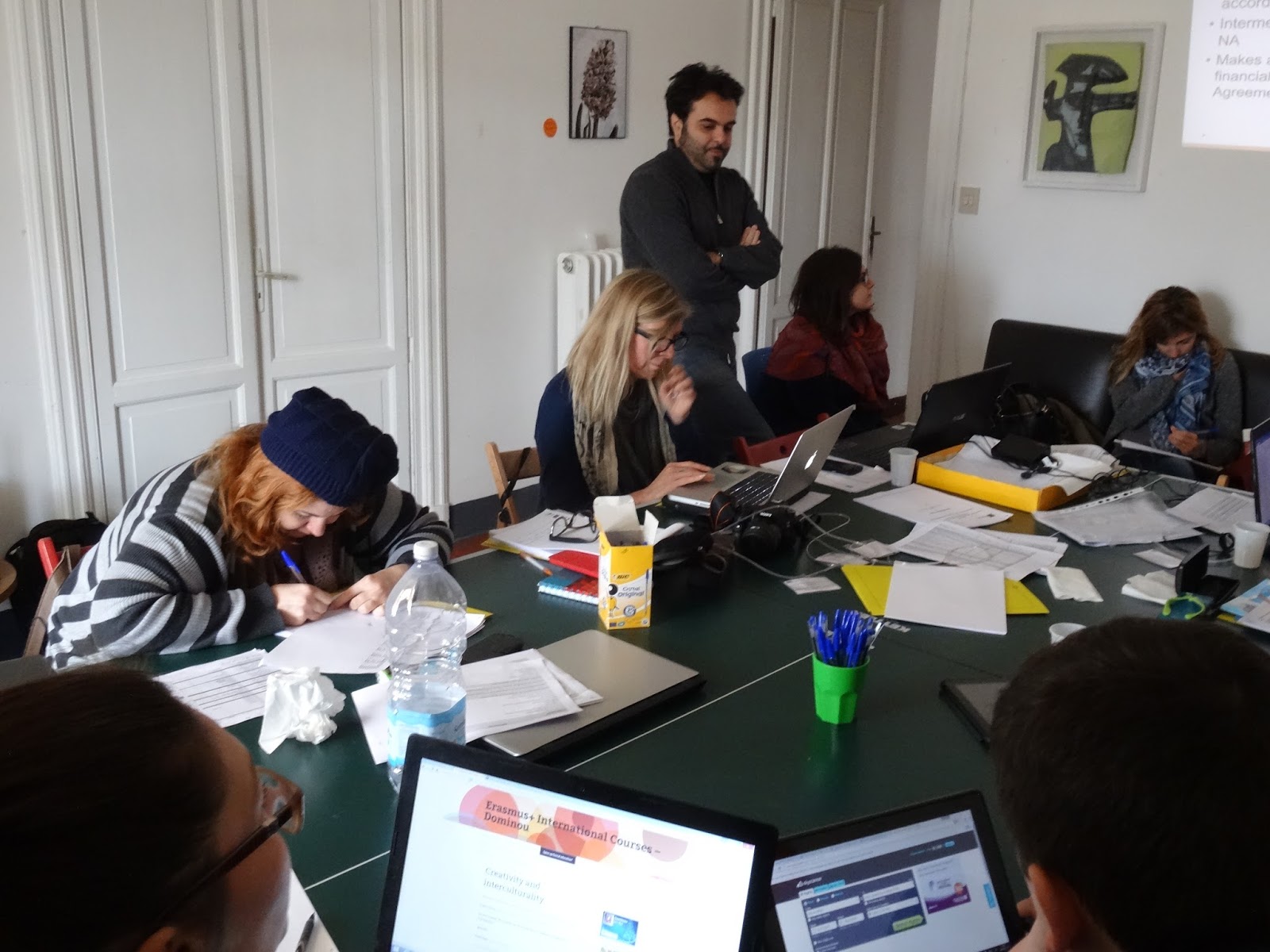
Palermo was the venue our hosts from Prism (International Promotion Sicily-World) had chosen for the first transnational meeting on their recently awarded new Erasmus + project entitled Sustain Your Life through Social Entrepreneurship.
The project aims to contribute to the exchange of good practices and the creation of a beneficial learning environment to encourage and enable youth workers and young people from Italy, Portugal, Romania, Lithuania, The Netherlands and Spain to recognise the value and pursue the opportunities that social entrepreneurship offers.
The project is designed to promote and support social entrepreneurship as a sustainable way of addressing the challenges that Europe is facing at the moment with the after-effects of the financial crisis and high levels of youth unemployment.  
The overall approach is to engage youth workers and young people in developing key competences in such a way that they are empowered to turn their innovative and entrepreneurial ideas into a reality and act as ambassadors of sustainable development, social innovation and growth in their local and global communities.

The project envisages the development and provision of tools and innovative training activities drawing on non-formal education methodologies in order to develop key skills for social entrepreneurship. Besides training courses in Italy, the Netherlands and Portugal as well as multiplier events in all participating countries, the results will be shared in a digital booklet and find their way to an open learning portal in order to sustain the project outcomes beyond the duration of the project and allow the re-use of the materials that were developed and brought together.

As in most transnational meetings all the participants were awarded a certificate of attendance at the end of the long "working weekend" of 15 - 18 January, 2016.


This project has been funded with support of the European Commission. This communication reflects only the author's view and the European Commission and the National Agencies are not responsible for any use that may be made of the information it contains.


13 November, 2015

MEDART kicks off


From October 2015 onwards the school of social work is involved in a new European project, under the project leadership of the Slovak organisation Divadlo Bez Domova.

MEDART is a transnational project of 8 European organisations and institutions focused on creating a methodical guide for education of socially disadvantaged adults by using theatre and dramatherapeutical approaches and techniques. The partnership will find, create and use theatrical practices, techniques and methods, which will help to dramatically increase disadvantaged adults´ chances of getting a job.

The basic rationale behind the project is that non-formal and informal education methods that are applied in dramatherapeutical work can be used for the acquisition, training, enhancing and empowering of skills and competences that can increase adult learners' employability. To be more specific, education in the field of social skills like self-knowledge, self-appraisal, self-confidence, communication skills, empathy, assertiveness, giving and receiving feedback, cooperation skills, decision making, conflict management, problem solving skills, creative thinking etc.

The result of the project will be an open educational resource – a methodical guide (PDF file) disseminated via online platforms, social networks, partner organisations´ websites, eventually by allied websites.

The major target groups for the methodical guide will be teachers, educators, trainers, drama therapists, social workers, students, schools, universities, institutions, NGOs and to everyone who is interested in working with socially disadvantaged people. Besides this, the project will have a direct impact on disadvantaged people involved in the theatre exercises as they will significantly increase their social skills and competences.

These are the project partners for MEDART:
Divadlo bez domova (Slovakia, coordinator)
Bielskie Stowarzyszenie Artystyczne Teatr Grodzki (Poland)
ProSoc - drustvo za implementacijo projektov in razvoj socialnega podjetnistva (Slovenia)
Acta community theatre ltd (United Kingdom)
Magyar Vöröskereszt Budapest Fovárosi Szervezet (Hungary)
Asociación cultural, social, de salud y bienestar ACUNAGUA (Spain)
Centro per lo sviluppo creativo DANILO DOLCI (Italy)
Rotterdam University of Applied Sciences/ Hogeschool Rotterdam (Netherlands) 

Here are some of the visuals of the kick off meeting in Bratislava, work in progress.
More pictures can be found here. 


This project has been funded with support of the European Commission. This communication reflects only the author's view and the European Commission and the National Agencies are not responsible for any use that may be made of the information it contains.


11 December, 2013

NL launch of Erasmus + at Media Plaza

An overwhelming interest for the event of the launch of the new Erasmus + programme: that's what took the National Agencies with surprise after opening up the event registration online. Especially for HEIs registration was full within a day, so each university was kindly requested to draw up a shortlist of three candidates to attend and I was one of the lucky ones to represent my university.
A plenary, two in-depth informative sessions as well as an opportunity to meet others and network, plus a number of short interesting pitches: a formula that usually works well if you approach the right speakers, as was the case.
It was the penultimate speaker that made the most impression, Nils Roemen. He introduced a new concept #durftevragen, translated into Dare to Ask, which is about social value creation and getting things done in a way that leaves money out of the equation more often than not.  The team is able to make things possible and manage to solve questions simply by way of their approach, which is also done on twitter. On their website he and his team put up wishlists to state the type of thing they need , and the response is usually quicker than you can imagine. Co-creation and sharing (knowledge, products, tips, approaches, networks etc.) are the core ingredients of the method they use. Definitely the most impressive and inspirational talk of the day. The final speaker was Jet Bussemaker of the ministry of Education, Culture and Science stating the importance of Erasmus + and the objectives and opportunities that were attached to this new EU programme. Appropriately, the event came to a festive end with minister Jet Bussemaker pushing the button to experience the fireworks of the launch and a glass of bubbly wine for all the participants.


25 January, 2011

Last preparations before the start


In the run up to the start of the international class this year, we had a preparatory meeting today with a great number of lecturers who will be teaching part of the programme. It was good to share with each other who was going to teach what over the next 3 months. All in all, there will be around 30 staff members who have taken up the challenge to teach in English.
In the past months it was stimulating to see and hear that so many had responded positively to our appeal to give a few lessons to the coming group of international students. A group (by the way) that has steadily grown over the last few years. When the school of social work joined forces with the social of education a number of years ago, we started out with a small (but highly motivated) group of 7 or 8 students. Since then the numbers have only grown and grown and this year we are expecting around 30 students, although we're still not 100 % sure of the exact number of students turning up.
During this preparatory session we discussed a number of issues, among which: what to expect when teaching in an international classroom. As a teacher / lecturer you are a role model to the students, but students with different cultural backgrounds have had different role models in their respective countries where their teachers employed different styles of teaching. When students are used to one teaching style and their teacher uses a different one, the result can be confusion, dissatisfaction, or cause other problems. This preparatory meeting was also meant to develop awareness of different teaching styles and how they differ from one culture to another.
Generally speaking, many lecturers do not realise that the more casual and accessible approach of Dutch teachers in classroom sessions is completely different compared to the teaching styles in countries like Bulgaria, the Czech Republic and Turkey, to name just a few.
For example, when students in their own home education system are primarily taught using a more authoritarian style they may be reluctant to participate in group or pair activities because of fear of making mistakes, or because of the unfamiliarity with the procedures. Students like most people feel uncomfortable with the unknown.
Into our international class will come students of differing cultural
backgrounds and academic histories, bringing with them certain experiences,
attitudes, expectations and preconceptions which constitute their own individual
cultural characteristics. It's then up to the teacher to make sure that the way things are done in the classroom are clearly introduced, explained and clarified when questions arise. It was Geert Hofstede who suggested that there are 2 possible strategies to cope with the perplexities of cross-cultural learning situations: 1. teach the teacher how to teach, and 2. teach the learner how to learn.
He proposed that the focus of the teacher's training should be on learning about his / her own culture: getting intellectually and emotionally accustomed to the fact that in other societies, people learn in different ways.
Here's the presentation I gave:

A few hours after the meeting I came across this webpage, succinctly stating a few common issues in international classrooms, a tip !

21 November, 2010

"afblazen" or calling it off: study trip to Berlin


Practical and fun website if you decide to learn some Dutch !
By coincidence today's Dutch word of the day is "afblazen", in English to call off (a plan). Why a coincidence you may ask.... well, last Friday was supposed to have been the day that a group of our students from the minor Media & Culture departed from Rotterdam en route to Berlin.
However, due to recent developments in Germany, the study trip was cancelled the day before departure. Germany is on heightened alert following a recent announcement that a terrorist attack was being planned for the country. Daily newspaper Der Tagesspiegel reported that the United States had told Berlin that between two to four al-Qaeda militants were on their way to Germany and Britain to attempt attacks at the end of November. Among the targets are said to be Germany's popular Christmas markets, scheduled to open in the coming days. Security has been stepped up at airports and train stations across the country.
On the other hand, the German government has urged citizens to remain calm and not to let the recent terror alerts affect their daily lives.
"There is reason for concern, but no reason for hysteria", German Interior Minister Thomas de Maiziere said at a gathering in the northern city of Hamburg.
In these circumstances, what would you have done facing this dilemma: go ahead as planned or cancel the study trip? Feel free to respond !

08 February, 2010

Welcome international students


Today was the kick off for the international class. Although not all the students had arrived in Rotterdam yet, it was still quite a full group. A great variety of countries was represented, making the international class more international than ever. Students had come all the way from Ireland, Finland, Bulgaria, Hungary, Greece, Portugal, Spain, Turkey and England.
After a morning session with some introduction there was an informal lunch followed by a tour through the Museumpark location, accompanied by a number of Dutch international "buddies" from the teacher training college for primary education.

After introducing the "golden rules" drawn up by last year's students and a short introduction of Rotterdam University it was time to call it a day. After all, there's only so much you can take in on a first day full of new impressions and people. Here's a quick look:

Welcome meeting at Museumpark from Jane Traveller on Vimeo.

05 October, 2009

Meet the Dutch delegation

Today was the first real preparation meeting of the four staff members that will represent ISO / CMV at the first project meeting in Vilnius. Just a few more weeks to go before they'll meet EU partners from Bulgaria, Turkey, Italy, Latvia, Lithuania and Romania.
Although there have been lots of short discussions and exchanges in the corridor, in between meetings and classes, this was the first time that we actually sat down to talk extensively about our input at the kick off meeting in Lithuania.
It is never easy to decide on the appropriate amount of information about one's organisation, one's perspectives on education and the way education (in this case ethics)is provided at one's own institute within only 10 to 15 minutes. There is always the risk of an overload of information. Educational systems differ from country to country and so do teaching methods, as well as values and norms in general.
The partnership in this new Grundtvig project not only covers 7 different countries, but it also represents a variety of organisations dealing with adult education. This will definitely mean a lot of new impressions and ideas to absorb in a short time.
As this is a learning partnership this is also what we are aiming at, learning from each other and moving forward together to produce a number of interesting results in the field of teaching ethical competences within Europe. It will be exciting to find out what the common European ground will be.
These are the four delegates from Rotterdam: Hans Donders, Harry Vrins, Danitsja Polak and Anja Stofberg.

21 November, 2008

Let's roll


Today plans for a blog on international initiatives have finally cristallized into a blogsite and a first blog item. From now on, this will be the spot where the different study programmes of the School of Social Work of Rotterdam University of Applied Sciences (Netherlands) will share their international projects, steps and ideas with anyone who is interested.
This launch today coincides with BLAID day: just a coincidence? Not really, sometimes you just need that little extra push to get going and that's what happened today.
With a sense of heightened awareness I spent this day recording "a day in my life" with an eye to sharing the pictures I am taking today with 5 other European partner schools in the BLAID project on flickr.com, in fact here is where you will soon find them.
This activity is part of a whole series of activities we have undertaken in the course of our Grundtvig project, subsidised by the EU.
For your information: BLAID stands for Blended Learning and Intercultural Dialogue. More info can be found here .